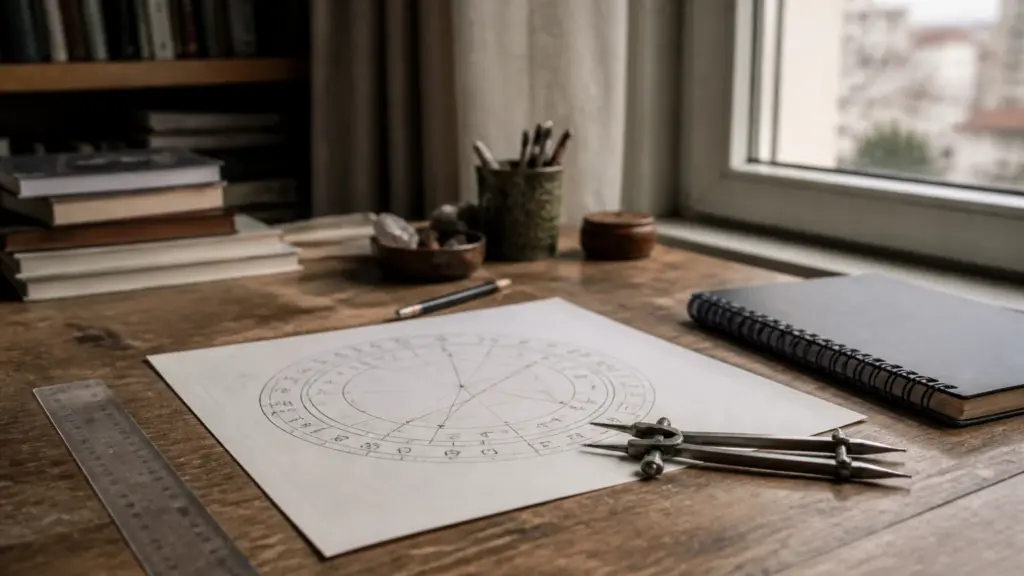

What is a natal chart, in the simplest terms? It is a circular diagram of the sky as it stood at the moment and place of your birth, showing the Sun, the Moon and the planets against twelve segments called houses. Nothing in it changes after you are born, which is exactly why people return to it for years. Treating it as a fixed reference, not a daily forecast, is the first step toward using it patiently.
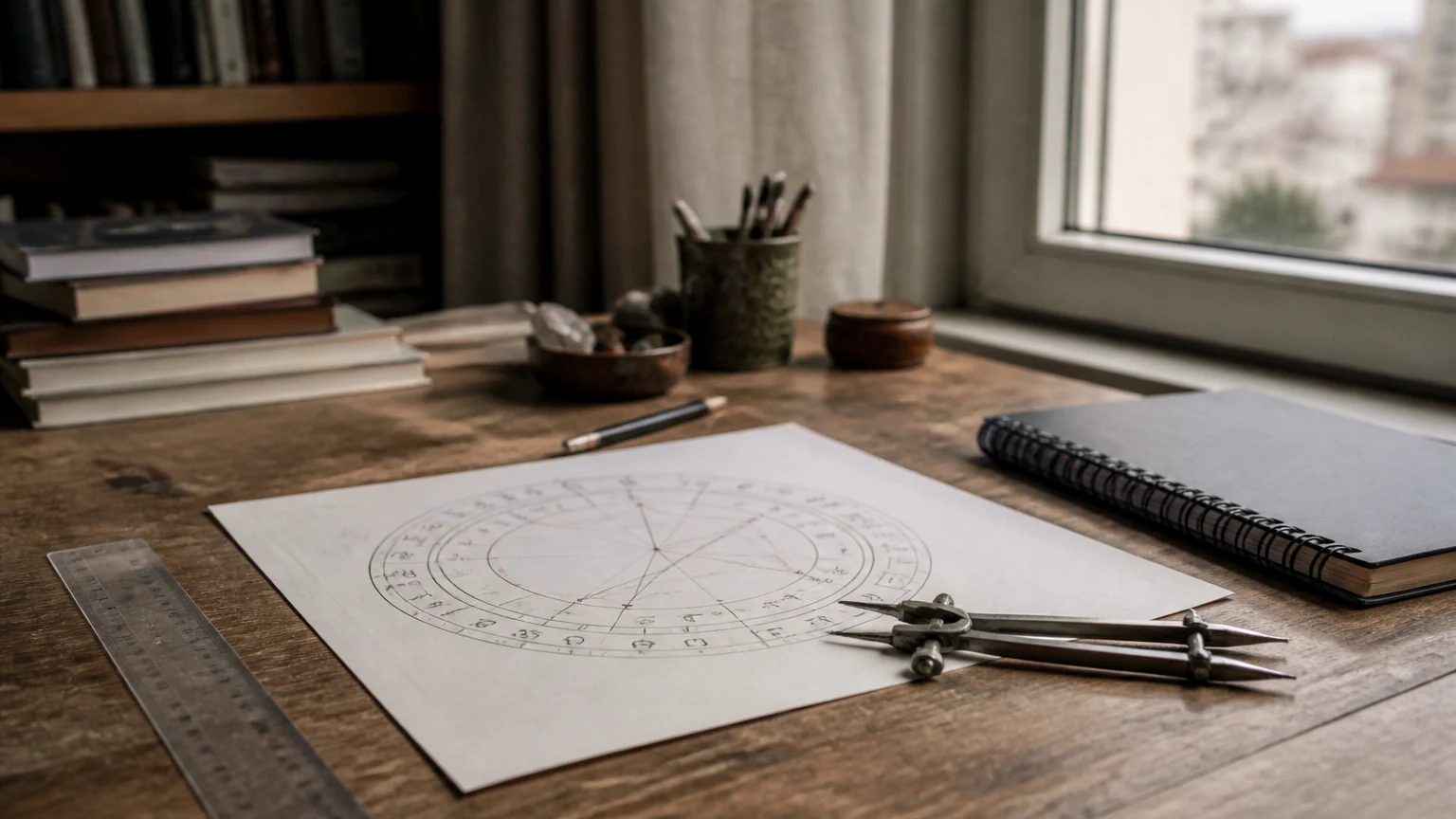
Why would a general news reader care about a birth chart at all? Many readers of everyday news look for ways to make sense of their own habits, relationships and work choices, and astrology is one of the oldest vocabularies for that. Whether or not one accepts its claims, the chart gives structure to reflection. A calculator makes that structure available without any prior training, which explains its steady popularity.
What the calculation actually needs
What information does a tool need from you? It asks for a birth date, a birth time and a birth place, because the positions of the planets depend on the date while the houses and the Rising sign depend on the exact time and location. According to its own description, the page behind Natal Chart Calculator converts those three details into planets, signs, houses and aspects. A missing or guessed time weakens the house layout, so a birth certificate is worth checking first.
Which meanings do the planets and signs carry? The page describes the Sun sign as the basic identity, the Moon sign as the emotional world and the Rising sign as the way others perceive you. Each additional planet adds a layer of motivation or behavior. Read together, they offer a more rounded portrait than the newspaper-style Sun sign alone, though they remain symbolic descriptions rather than measurements.
What do houses and aspects add? Houses indicate the areas of life where each planetary energy tends to be expressed, such as home, work or partnership. Aspects describe how planets relate to one another, and the tool’s guide presents them as sources of harmony or tension. Seeing a tense aspect is not a verdict; it simply marks a theme that might ask for more attention over time.
Building a sustainable reading habit
How much should you read in one sitting? A sensible pace is one placement at a time, perhaps a single planet and its house, followed by a few days of quiet observation. Trying to absorb every symbol at once usually leaves people with a pile of contradictory phrases. Slow reading lets you test each description against your own experience and discard what does not fit.
Can a chart help with long-term planning? It can serve as a prompt for questions about patience, routine and priorities, which are the raw materials of any long plan. Someone who notes a recurring theme around work and rest, for example, may decide to build steadier habits around it. The chart does not choose the path; it offers a vocabulary for thinking about it over many years.
How reliable is a free calculator? Accuracy depends mostly on the quality of your input and on the calculation method, such as the house system the tool applies. Two tools can show slightly different house cusps from the same data, and that is normal. Comparing results from more than one source, and noting which settings each uses, keeps expectations realistic.
What about privacy and keeping records? Birth details are personal information, so it is reasonable to read what a tool says about storing them before entering them. Saving a copy of your chart, along with the settings used, lets you return to the same reference later instead of recalculating with different assumptions. A small notebook of observations beside it turns a one-time curiosity into a lasting practice.
Where does this leave a first-time user? A natal chart is best understood as a long conversation with a fixed document, not an answer delivered once. The calculator does the arithmetic of the sky, and the reader supplies the patience and judgment. Approached that way, it remains useful for years, because each new life experience gives the same symbols a fresh context.